

Appearance
Portfolio Analysis Tool: Diagnostics, Stress Testing, and Risk Reports
TickerForge Portfolio Analysis helps investors move beyond simple position tracking and understand the real structure of portfolio risk. The workflow starts with holdings and cash, then turns them into portfolio health, concentration, sector exposure, stress-test impact, and report views that are easier to review than a raw broker table.
This page is the portfolio diagnostics hub. Use it to understand the report family, then move to Import Portfolio when you want to run the action workflow on your own holdings. If you are comparing access levels for recurring monitoring, alerts, or advanced portfolio analytics, review Pricing.
Instead of only showing what you own, TickerForge helps answer the questions investors usually ask before adding risk:
- How concentrated is my portfolio?
- What happens if the S&P 500 drops 10%?
- Which holdings drive the biggest drawdown risk?
- Is my sector allocation actually diversified?
- Is the portfolio healthy, or just performing well in one market regime?
- Which positions, sectors, or exposures deserve closer review?
TickerForge is not a trading bot and does not promise future returns. It is a portfolio analysis tool for stress testing, portfolio health checks, risk diagnostics, sector allocation analysis, and portfolio risk visualization.
How TickerForge checks this
Portfolio diagnostics combine portfolio health, concentration, sector exposure, and stress-test scenarios. The calculation logic is documented in the Portfolio Health Check and Portfolio Stress Test methodology pages.
See an example report: Before importing your own holdings, review a real sample PDF or compare public model portfolios in the Portfolio Diagnostics demo. Download sample PDFOpen Portfolio Diagnostics demo
What this does not tell you: Stress tests are scenarios, not forecasts. TickerForge does not place trades, prevent drawdowns, manage portfolios, or provide personalized financial advice.
Run a Free Portfolio Health Check
Use Import Portfolio to paste or upload your holdings, include free cash, and run a real diagnostic. Start with the Portfolio Snapshot, then review the Health Check, Sector Allocation, and Stress Test reports to see which positions or exposures deserve closer review.
Educational decision-support software. Not financial advice.
Start with the Right Workflow
Choose the path that matches what you want to analyze.
Analyze your own portfolioImport PortfolioUpload or paste holdings, include cash, and run a portfolio health check, concentration review, sector view, and stress test.Import portfolioTry model portfolio diagnosticsLive Portfolio DemoCompare public model portfolios and see how TickerForge scores performance, health, risk, and concentration.View live demoBuild a new portfolioPortfolio BuilderCreate a rules-based model portfolio before changing your current allocation elsewhere.Build portfolio
What Is TickerForge Portfolio Analysis?
TickerForge Portfolio Analysis is a portfolio analytics workflow that turns holdings, cash, long/short exposure, sector allocation, and stock-level diagnostics into structured risk reports.
It is designed for investors who want more than a tracker.
A simple portfolio tracker tells you:
- current positions;
- daily gain or loss;
- allocation by ticker;
- historical performance.
TickerForge focuses on the next layer:
- portfolio health;
- stress-test behavior;
- drawdown exposure;
- sector concentration;
- long/short risk;
- margin-call sensitivity;
- risk contribution by position;
- structural weaknesses that may not be obvious from performance alone.
The goal is not to predict exactly what the market will do. The goal is to show how your portfolio may behave when market conditions change.
What Can TickerForge Diagnose?
TickerForge Portfolio Analysis is built around several practical portfolio risk questions.
Portfolio risk analysis
TickerForge reviews how much of your portfolio risk comes from individual positions, sectors, market beta, and gross exposure.
This helps identify whether your portfolio is truly balanced or whether it depends too heavily on a few names, one sector, or one market narrative.
For a deeper investor checklist, read Portfolio Risk Analyzer and Portfolio Concentration Risk. Both guides explain why a portfolio can look diversified while still depending on the same factor, sector, or drawdown driver.
Portfolio health check
The portfolio health check summarizes the overall structure of the portfolio and highlights warning areas.
It is designed to answer:
- Is the portfolio structurally healthy?
- What is penalizing the score?
- Is the portfolio too concentrated?
- Is the cash level too low for the risk profile?
- Are there obvious allocation problems?
Portfolio stress test
TickerForge runs downside and upside stress scenarios to estimate how the portfolio might react to sharp market moves.
The downside stress test focuses on drawdown behavior when the market falls.
The upside stress test is especially useful for portfolios with short exposure, because rallies can create losses in short books and increase margin pressure.
Sector allocation analysis
TickerForge looks at sector exposure using a gross-aware view that can handle long and short positions.
This helps answer:
- Which sector really dominates the portfolio?
- Are shorts masking long exposure?
- Is the portfolio exposed to one crowded theme?
- Is diversification structural or cosmetic?
Portfolio risk visualization
TickerForge reports are designed to make risk visible.
Instead of hiding portfolio risk in raw tables, the reports turn exposure, concentration, drawdown, stress impact, and sector allocation into clear diagnostic views.
How This Is Different from a Simple Portfolio Tracker
Most portfolio trackers are useful for monitoring positions, but they often stop at surface-level reporting.
| Portfolio tracker | TickerForge Portfolio Analysis |
|---|---|
| Shows current holdings | Diagnoses portfolio structure |
| Tracks daily P/L | Stress-tests market scenarios |
| Shows allocation percentages | Highlights concentration and risk contribution |
| Shows sector weights | Compares gross and net sector exposure |
| Focuses on performance | Focuses on risk, health, and resilience |
| Reports what happened | Helps review what could break |
TickerForge is closer to a portfolio risk analyzer than a basic tracking dashboard.
The core idea is simple: performance tells you what already happened. Portfolio risk diagnostics help you understand what your portfolio is exposed to now.
See Portfolio Analysis in Action 🎬
Here is a quick look at how you can import your portfolio via a simple IBKR screenshot and get an instant portfolio risk analysis.
Educational simulation; not investment advice.
Sample report
Download sample PDFDownload a real Portfolio Diagnostics PDF
See the kind of snapshot TickerForge can generate after a portfolio import: scores, exposure, concentration, stress scenario, ownership context, insider activity, and diagnostics notes.
The Four Core Portfolio Reports
TickerForge Portfolio Analysis currently focuses on four report families:
- Portfolio Snapshot
- Portfolio Health Check
- Portfolio Stress Test
- Sector Allocation Analysis
Each report answers a different portfolio risk question.
Report 1 — Portfolio Snapshot: Instant Risk Overview
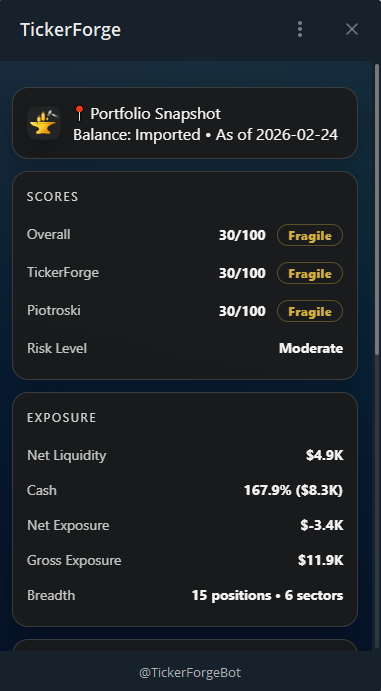
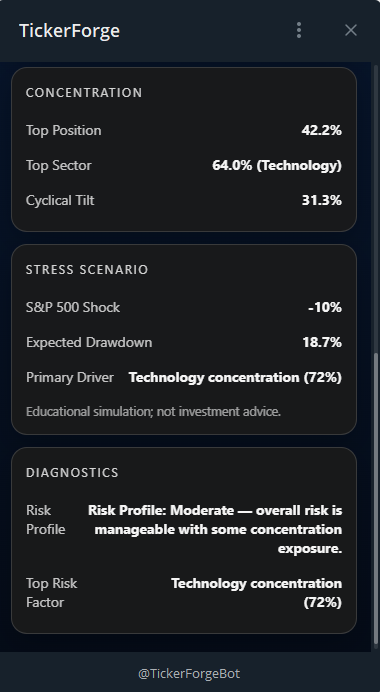
The portfolio snapshot is a one-screen view of your portfolio's structure: scores, exposure, concentration, and primary stress driver.
What does a portfolio snapshot tell you?
- How healthy is my portfolio right now?
- Am I diversified, or just feeling diversified?
- What is the single biggest structural risk?
- Which exposure should I review first?
Example output highlights
- Equity / cash / breadth
- Composite scores
- Risk profile
- Top-name concentration
- Top-sector concentration
- Cyclical tilt
- Stress scenario summary
- Primary risk driver
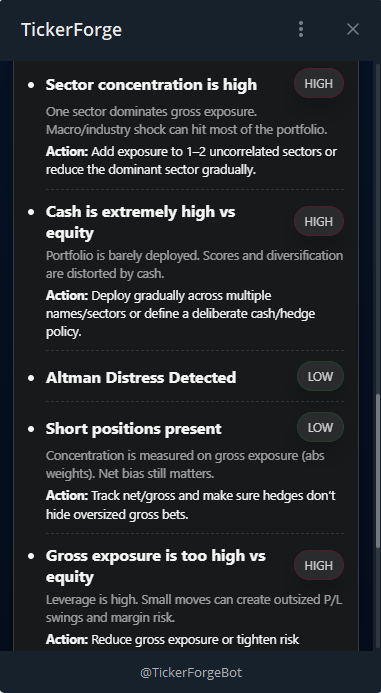
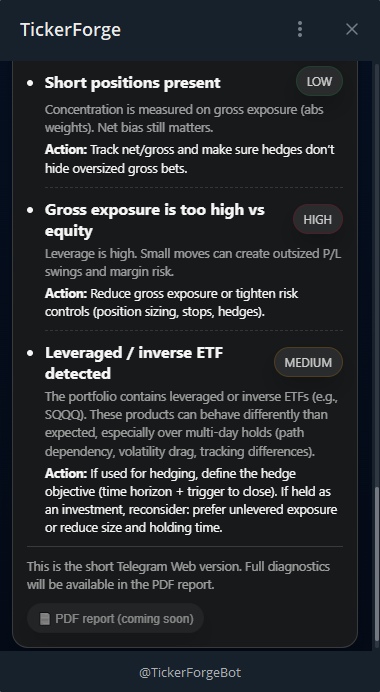
Report 2 — Portfolio Health Check: Full Risk Audit
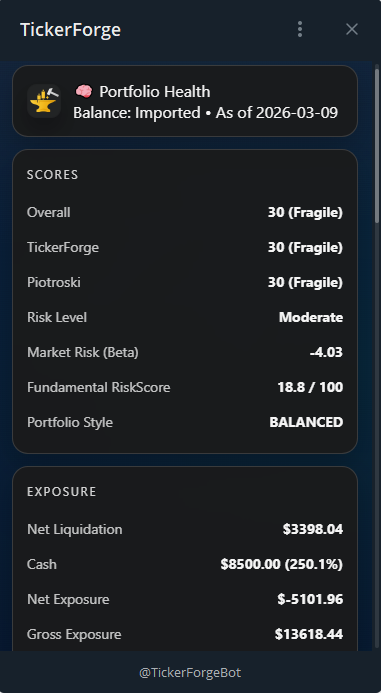
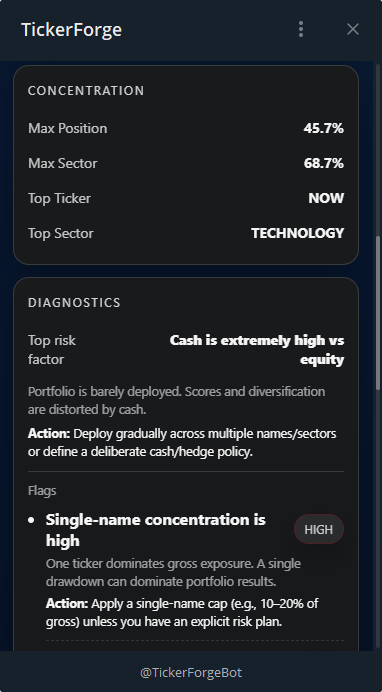
The portfolio health check explains why your score looks the way it does and what to review next.
It is designed as a structured portfolio health audit rather than a simple performance report.
What does a portfolio health check reveal?
- What is penalizing my portfolio health score?
- What are the biggest risk flags in my current holdings?
- Is concentration creating hidden fragility?
- Which actions would improve portfolio structure?
Example output highlights
- Net liquidation value
- Gross exposure
- Net exposure
- Long/short-aware exposure view
- Good / warning sections
- Concentration diagnostics
- Action list for review
Report 3A — Portfolio Stress Test: Downside Scenario
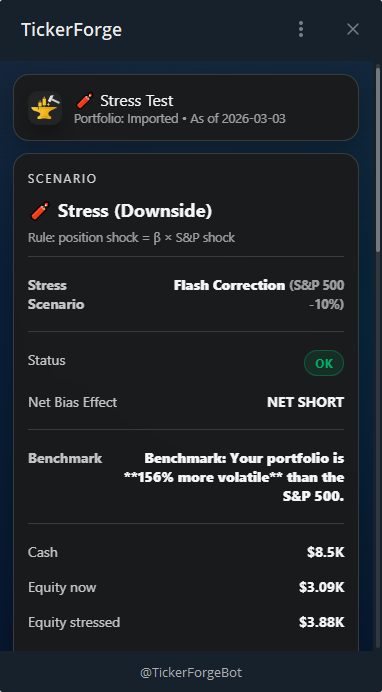
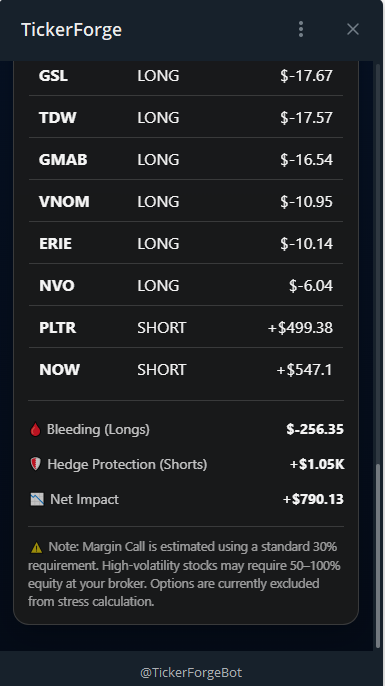
The downside portfolio stress test estimates how your portfolio could react to a market decline using beta-weighted impact analysis:
position shock = β × index shock
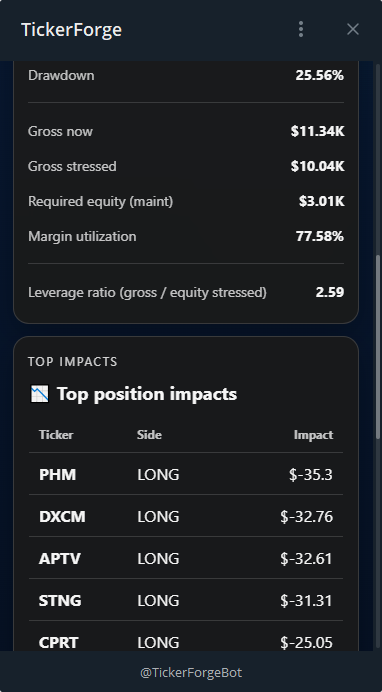
This helps you understand portfolio drawdown behavior and which positions drive losses or hedging gains when markets fall.
What does a downside portfolio stress test show?
- What happens to my portfolio if the market drops 10%?
- Which holdings contribute most to the drawdown?
- Do short positions actually hedge the long book?
- Is one position responsible for too much downside impact?
- Does the portfolio depend too heavily on high-beta exposure?
Example output highlights
- Equity now vs stressed equity
- Estimated drawdown percentage
- Net dollar impact
- Long book impact
- Short hedge impact
- Gross exposure after stress
- Top position impacts ranked by loss contribution
Report 3B — Portfolio Stress Test: Upside + Margin Call Risk
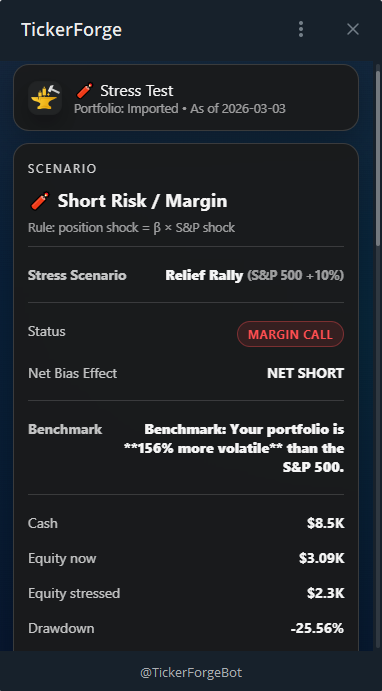
The upside scenario is the mirror image of the downside stress test.
It is especially important for portfolios with short positions. When markets rise sharply, short exposure can lose quickly and increase margin pressure.
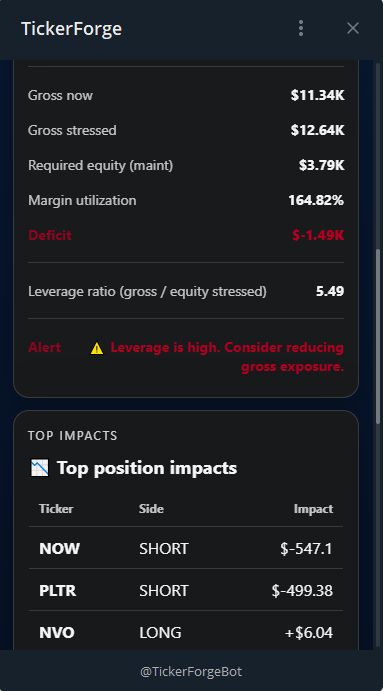
This stress test adds a practical maintenance-margin heuristic to flag when a portfolio could become fragile in an upside shock.
What does an upside stress test reveal?
- How fragile is my short book in a strong market rally?
- Is gross exposure too high relative to equity?
- Which short positions are the main margin-risk drivers?
- Could an upside move create a forced-risk event?
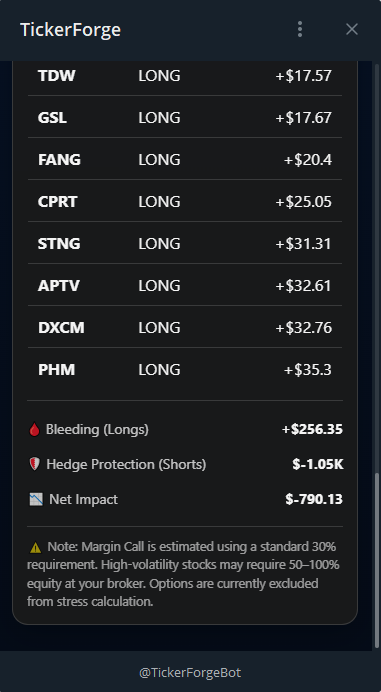
Example output highlights
- Equity now vs stressed equity
- Net dollar impact
- Long vs short position impacts
- Gross exposure after upside stress
- Required equity heuristic
- Margin-call triggered status
- Top impact positions
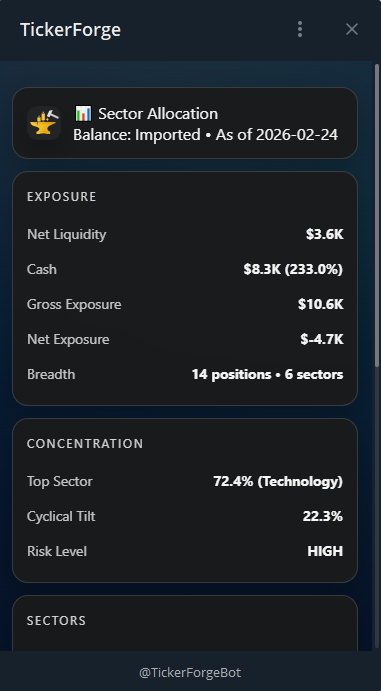
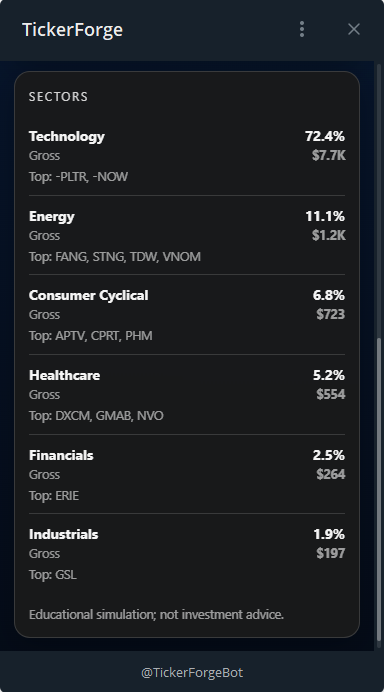
Report 4 — Sector Allocation Analysis: Is Your Diversification Real?
Sector allocation analysis shows whether your diversification is structural or just cosmetic.
TickerForge uses a gross-aware sector allocation view that can handle long and short positions. This matters because net exposure can sometimes hide the real amount of risk inside a sector.
What does sector allocation analysis tell you?
- Which sector actually dominates my portfolio risk?
- Am I balanced, or dangerously tilted toward one area?
- Are short positions masking real sector exposure?
- Is my portfolio exposed to one crowded market theme?
- How much of my portfolio depends on cyclical or high-beta areas?
Typical output
- Top sectors by gross exposure
- Net exposure by sector
- Long vs short sector breakdown
- Cyclical tilt diagnostics
- Concentration risk flags
How to Try TickerForge Portfolio Analysis
You can start from three different workflows depending on your goal.
Analyze your own portfolio
Use the import workflow when you already have positions and want to check real portfolio risk.
Try live model portfolio diagnostics
Use the diagnostics demo when you want to see the system with public model portfolios before importing your own data.
👉 Try model portfolio diagnostics
Build a new portfolio from rules
Use the portfolio builder when you want to create a model portfolio, compare ideas, or design a rules-based allocation.
Who This Portfolio Analysis Tool Is For
TickerForge Portfolio Analysis is useful for investors who:
- hold multiple stocks across sectors;
- want to understand downside exposure before volatility rises;
- use long and short positions;
- want to see whether sector allocation is really diversified;
- want to compare risk across model portfolios;
- need a faster way to review concentration, beta, drawdown, and health;
- prefer structured diagnostics over social-media stock tips.
It is not designed to replace judgment, research, or professional advice. It is designed to make portfolio risk easier to see.
Related / Read Next
- Import your own portfolio — analyze real holdings with portfolio diagnostics
- Try portfolio diagnostics demo — compare public model portfolios
- Portfolio Diagnostics: How to Analyze Risk, Balance, and Concentration — buyer checklist for comparing portfolio analytics software
- Portfolio Risk Visualization — see concentration, exposure, health, and stress before adding risk
- How to Stress Test Your Portfolio — practical workflow for running downside and upside scenarios
- How Portfolio Stress Testing Works — the math behind beta-weighted impact calculations
- Portfolio Health Score Logic — how the composite health score is calculated
Final Takeaway
TickerForge Portfolio Analysis is built for investors who want to understand portfolio risk before it becomes obvious.
It combines portfolio stress testing, health checks, sector allocation analysis, concentration diagnostics, drawdown exposure, and portfolio risk visualization into one structured workflow.
Start with the path that fits your goal: